
Nesting Season Update
Magnetic Island Nesting Season 2025–2026
Encouraging results from this year’s sea turtle nesting season highlight the importance of habitat protection, temperature monitoring and community involvement across Magnetic Island.
Season Overview
Australia’s unique inshore sea turtle
The 2025–2026 sea turtle nesting season on Yunbenun / Magnetic Island has delivered encouraging outcomes, highlighting both the resilience of local turtle populations and the value of ongoing conservation work.
Across the island, a total of 22 nesting events were reported, with 18 confirmed nests recorded. Of these, 17 were located in remote areas, while one nest was recorded at Geoffrey Bay. This distribution reinforces the importance of protecting quieter, less-disturbed coastal habitats where turtles can nest safely.
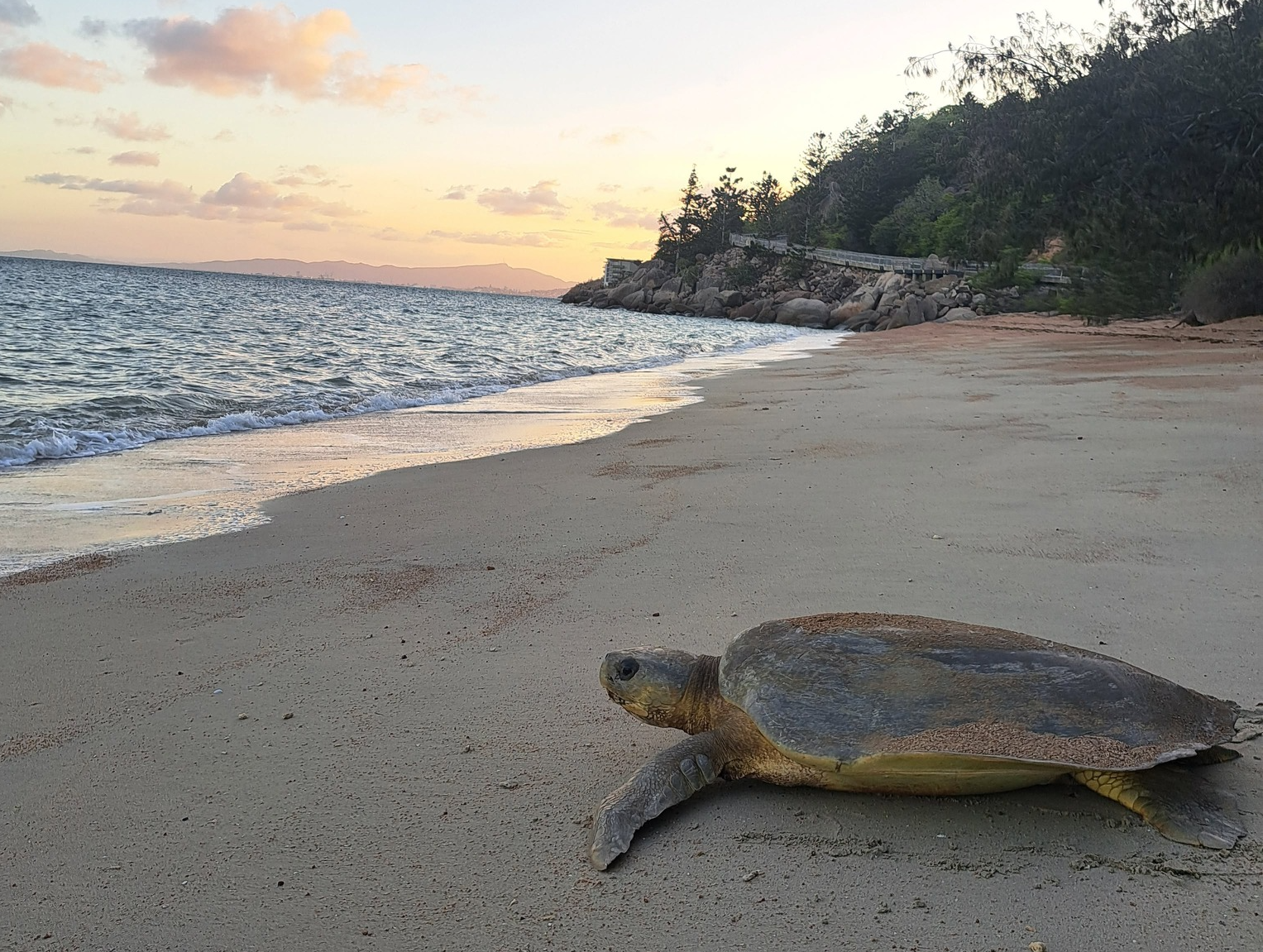
Appearance and biology
A Standout Nest at Geoffrey Bay
The Geoffrey Bay nest was laid by a flatback turtle, Natator depressus , and provided particularly valuable information. The nest was positioned in an excellent natural location, shaded beneath a native Beach She-oak, Casuarina equisetifolia .
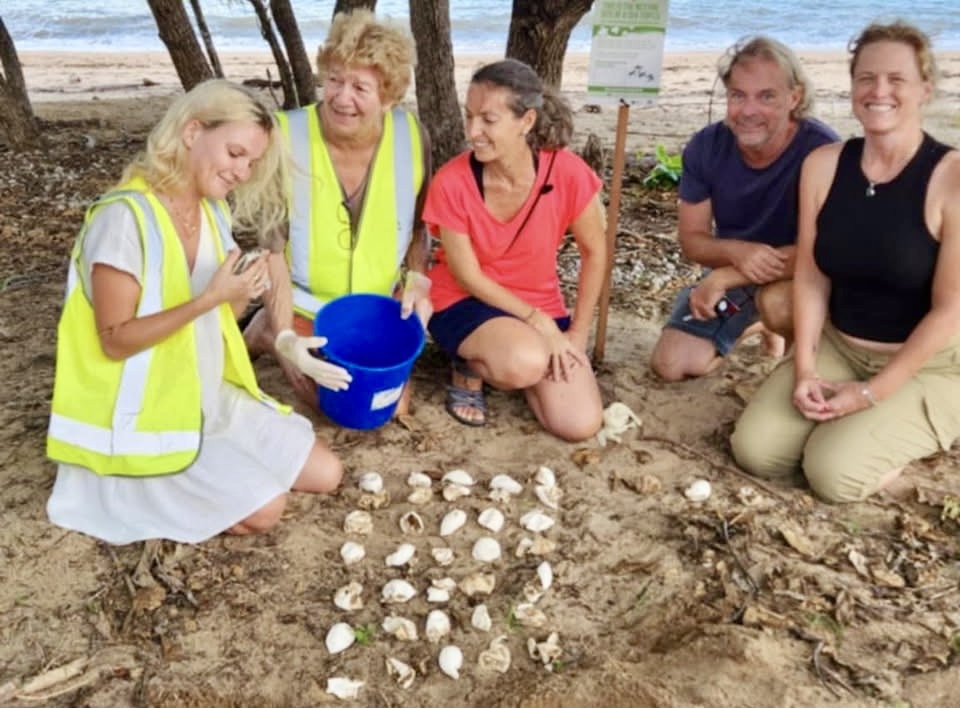
This nest produced 55 live hatchlings, with only three undeveloped eggs recorded. These results suggest strong hatchling success and demonstrate the potential benefits of natural shade in moderating nest temperature.
Temperature monitoring showed an average nest temperature of 29.37°C. This is significant because sea turtle sex is influenced by incubation temperature. Cooler nests tend to produce more male hatchlings, while warmer nests tend to produce more females. Very hot nests can also increase the risk of embryo or hatchling mortality.
Nest Temperatures
Why Nest Temperature Matters
MINT monitors nest temperatures using HOBO data loggers, helping build a clearer picture of local nesting conditions and hatchling outcomes. This research is increasingly important as climate change places additional pressure on nesting beaches.
In previous years, many nests on Magnetic Island have averaged between 30°C and 33°C. These warmer conditions are likely to produce mostly female hatchlings and may increase heat stress within nests. By contrast, the naturally shaded Geoffrey Bay nest remained cooler and may have supported a more balanced sex ratio while maintaining strong hatchling survival.
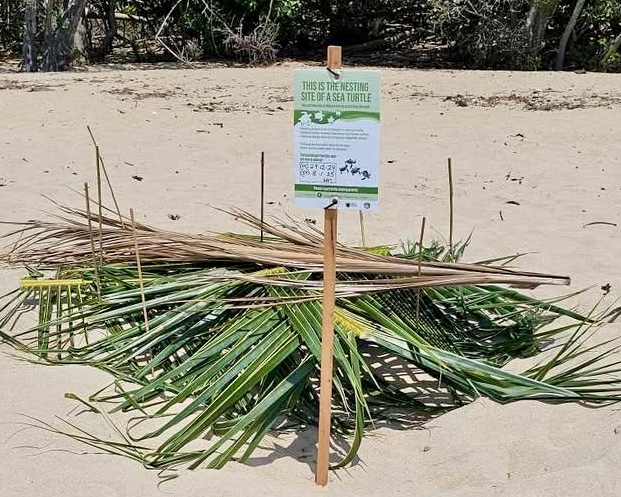
Important Role
A Positive Result for Local Turtles
The success of the Geoffrey Bay nest is a positive sign for Magnetic Island’s local turtle population. It shows how natural coastal vegetation can play an important role in protecting nests and improving hatchling outcomes.
MINT extends its sincere thanks to everyone who helped monitor, protect and report turtle nesting activity this season. Each nest recorded adds to our understanding of sea turtles on Magnetic Island and helps support their long-term protection.